Sunday, July 15, 2012
Wascally Wabbits
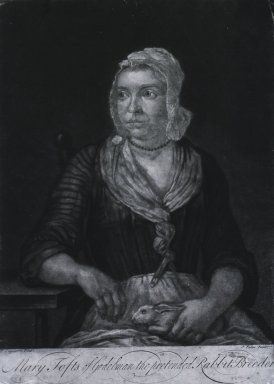
In September 1726 a young woman named Mary Toft, about 25 at the time, went into labour with her third child. The pregnancy had been complicated. Forced to undertake heavy work in the fields throughout she stated that she had suffered a great deal of pain and a month prior had passed several pieces of flesh and clots.
On the night Mary laboured in September her neigbour watched incredulously as Mary produced several pieces of animal flesh. The neighbour showed these to Mary's mother in law, a midwife, who contacted John Howard a local surgeon and "man-midwife".
Sceptical, Howard attended Mary the following day. Initially he found nothing. However Mary once again went into labour a few days later. Howard returned and subsequently delivered three legs of a tabby cat, a rabbit leg and the intestines of a cat.
Thursday, July 5, 2012
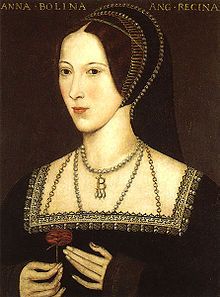
The D-Downfall of Anne Boelyn
Anne Boelyn.
Love her or hate her, it's hard to decide.
Henry the Eighth couldn't really figure it out either.
Anne Boelyn was born somewhere between 1501 and 1507 at Hever Castle in Kent. She was sent to France to wait apon Queen Claude of France and complete her studies, returning to England when she was about twenty. This education in France proved pivotal and may have shaped some of Anne's more reformative beliefs in her later life.
Anne's family, and in particular her Uncle, Thomas Howard, the Duke of Norfolk, were ambitious for position at court. They must have been delighted when Anne quickly caught the eye of King Henry VIII in 1526 and that within a year he had proposed marriaged to her.
The slight problem being, of course, that he was already married to Catherine of Aragon.
Catherine of Aragon, Henry's first wife, had birthed six children. A stillborn son, a stillborn daughter, two sons who lived less than a month, both named Henry, Duke of Cornwell, an unnamed daughter who lived less than a week, and Mary, who would go on to become Queen of England.
She had not borne a living son, and Henry was determined to set her aside.
Love her or hate her, it's hard to decide.
Henry the Eighth couldn't really figure it out either.
Anne Boelyn was born somewhere between 1501 and 1507 at Hever Castle in Kent. She was sent to France to wait apon Queen Claude of France and complete her studies, returning to England when she was about twenty. This education in France proved pivotal and may have shaped some of Anne's more reformative beliefs in her later life.
Anne's family, and in particular her Uncle, Thomas Howard, the Duke of Norfolk, were ambitious for position at court. They must have been delighted when Anne quickly caught the eye of King Henry VIII in 1526 and that within a year he had proposed marriaged to her.
The slight problem being, of course, that he was already married to Catherine of Aragon.
Catherine of Aragon, Henry's first wife, had birthed six children. A stillborn son, a stillborn daughter, two sons who lived less than a month, both named Henry, Duke of Cornwell, an unnamed daughter who lived less than a week, and Mary, who would go on to become Queen of England.
She had not borne a living son, and Henry was determined to set her aside.
Sunday, July 1, 2012
Observations in Midwifery
A truly unique tome is currently up for auction in the United Kingdom.
Observations in Midwifery, by Percival Willughby is a record of 150 case histories attended by Willughby over his years of practice. Written in about 1670 it was not published until many years after his death in 1863. Only 100 copies were produced, 17 sold, and only 2 remain in existance today.
Monday, June 25, 2012
The Clap
Gonorrhoea and syphilis. Two microscopic organisms that over the years have removed more men from the battlefield of various conflicts than fists, bayonets, bullets, sabres, mustard gas, grenades, mortars, tanks or any creative combination thereof, combined.
An address by Surgeon General Gorgas before the General Sessions of the American Public Health Association in August 1917 expresses the wish that if he were provided a magic wand and were given the choice to eradicate wounds or venereal disease, he would choose venereal disease. "A man with a flesh wound through the thigh is back in the trenches within ten days or two weeks, frequently in less time. If he contracts a venereal disease, his average disability is very much longer. In other words, to the commanding general, the loss is greater for a man who contracts gonorrhea than for a man who is shot through the thigh, and if the commanding general could lay aside all question of morality,he would probably choose the eradication of venereal disease rather than the prevention of wounds."
Monday, May 21, 2012
Caesar
Your intrepid reporter is currently at an intensive pre-examination revision course, learning all about saving the lives of mother's and babies. Which is by way of an excuse as to why there will be no detailed post this month.
Instead from the collection of the US National Library of Medicine we have the following image. A woodcut entitled La commare o riccoglitrice dell'eccmo. sr. Scipion Mercurii, and dating back to 1601 it depicts a woman being restrained by two other man as another surgically extracts a foetus from her abdomen.
One of the earliest known images of caeserean section.
Caeserean section as we know it today was not how the procedure was performed prior to mid this century. Generally it was only performed post-mortem, as in after the mother was already dead, which meant the success rate of also delivering a live baby was quite slim.
Thankfully on my revision course I am learning that we have come a long way....
Contrary to popular belief, by the way, it seems likely that Julius Caesar was not born this way, as his mother survived his birth - but we'll save his story for another day.
Instead from the collection of the US National Library of Medicine we have the following image. A woodcut entitled La commare o riccoglitrice dell'eccmo. sr. Scipion Mercurii, and dating back to 1601 it depicts a woman being restrained by two other man as another surgically extracts a foetus from her abdomen.
Caeserean section as we know it today was not how the procedure was performed prior to mid this century. Generally it was only performed post-mortem, as in after the mother was already dead, which meant the success rate of also delivering a live baby was quite slim.
Thankfully on my revision course I am learning that we have come a long way....
Contrary to popular belief, by the way, it seems likely that Julius Caesar was not born this way, as his mother survived his birth - but we'll save his story for another day.
Subscribe to:
Posts (Atom)