Many doctors chose to leave their practice during WWII and sign up for the Australian Army medical corps. Our subject today was one such doctor.
Dr. Leslie MacDonald Outridge was born in Brisbane on the 1st November 1900. He was a graduate of the University of Sydney in 1924, and then returned to practice in various locations around Queensland before settling on Gympie to set up his own practice.
Showing posts with label WWII. Show all posts
Showing posts with label WWII. Show all posts
Saturday, September 12, 2015

Friday, June 27, 2014
Paralysed
The other day I recieved a terrifying notification via email, advising me to be alert for evidence of polio in returned travellers. This is due to upheaval in Syria, Pakistan and Afghanistan and a growing global antivaccination sentiment. A crying shame as only a few short years ago we were incredibly close to declaring this planet polio free, an incredible legacy to pass onto our children.
In her day job your author does her best to see as many children as possible immunised against deadly diseases just like this one. Now she will use this little hobby of hers to remind whatever audience she has exactly why vaccinations are so important.
In her day job your author does her best to see as many children as possible immunised against deadly diseases just like this one. Now she will use this little hobby of hers to remind whatever audience she has exactly why vaccinations are so important.
Friday, February 22, 2013
Goofballs
My apologies, dear readers, I didn't forget this blog, there's just been a lot of stuff going on in Turkeyland. Moving house, recieving my fellowship, sitting exams and a wedding in six weeks.
So when I stumbled across some information on barbiturates I decided it was an appropriate subject for a post because I feel like I really need some....
Leaders have been experimenting with pharmaceuticals to improve the condition of their army troops for as long as armies have existed. We've already discussed the German's and their use of amphetamines during WWII. The Allies, too, tried distributing medications to their troops to try and make them perform better.
Monday, June 25, 2012
The Clap
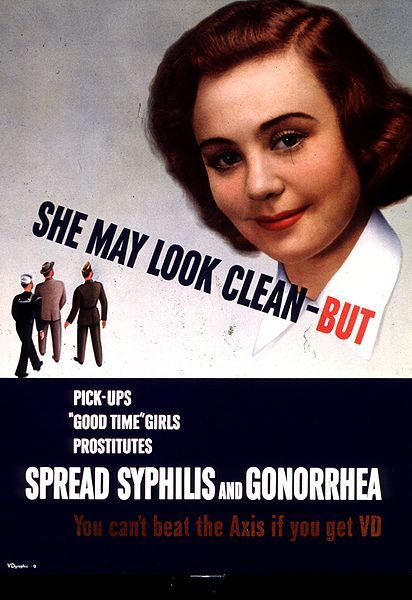
Gonorrhoea and syphilis. Two microscopic organisms that over the years have removed more men from the battlefield of various conflicts than fists, bayonets, bullets, sabres, mustard gas, grenades, mortars, tanks or any creative combination thereof, combined.
An address by Surgeon General Gorgas before the General Sessions of the American Public Health Association in August 1917 expresses the wish that if he were provided a magic wand and were given the choice to eradicate wounds or venereal disease, he would choose venereal disease. "A man with a flesh wound through the thigh is back in the trenches within ten days or two weeks, frequently in less time. If he contracts a venereal disease, his average disability is very much longer. In other words, to the commanding general, the loss is greater for a man who contracts gonorrhea than for a man who is shot through the thigh, and if the commanding general could lay aside all question of morality,he would probably choose the eradication of venereal disease rather than the prevention of wounds."
Sunday, May 6, 2012
Hitler and His Habit
The history of humans and drug use is a
fascinating one. Human beings have been
using mood-altering substances since the dawn of time. Traces of alcohol have been found in pots
excavated from ancient dig sites in Greece and Rome. For centuries the biggest trade commodities world wide have been alcohol, nicotine, coffee and opiates, mood altering substances all.
It seems that something about being human
makes us want to alter our state of mind and the Fuhrer was not immune.
Amphetamine was synthesised for the first
time in 1887 by a chemist working at the University of Berlin named Lazăr
Edeleanu (given the subject of this story, it is perhaps relevant that he was a
Romanian Jew). Methamphetamine, a
related compound, came along in 1893 thanks to a Japanese chemist named Nagai
Nagayoshi. It was first marketed in 1900
under the trade name Benzdrine as a bronchodilator and an appetite suppressant. Most people are more aware of amphetamine today by its street names such as ice, speed and ecstasy. They are also probably much more aware of its other properties. Amphetamine, and its related compounds are
very, very good stimulants.
Unfortunately they also have a number of deleterious side effects. These include paranoia, agitation, hallucinations, florid psychosis and rapid increasing dependence.
Over the years several nations have experiemented with amphetamines to help their soldiers stay awake. Perhaps the most notorious
culprit in this department was the German army. During World War II thousands of German soldiers became addicted
to methamphetamine, marketed as Pervitin.
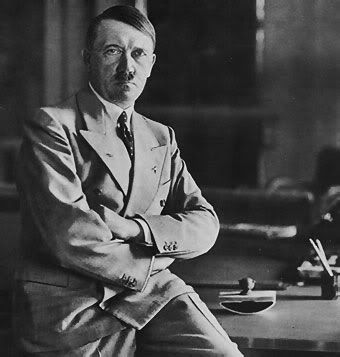
There’s no concrete evidence that Hitler
was also using Pervitin. However the hearsay is
fairly compelling. Given the widespread
use of the drug by the German army, it is certain that its
properties were very well known to him.
What is known is that every morning from 1941 Theodor Morell, Hitler’s personal physician,
attended him and gave him an intravenous
injection. Throughout 1943 these
injections began to be administered at several times throughout the day. Reportedly these injections contained 'vitamins', however following their administration Hitler was said to become very active, alert, happy, talkative
and able to stay awake for great periods of time.
(Dr. Theodor Morell)
Hitler is widely described as having been
insane especially as his behaviour and military judgement became increasingly
erratic. A lack of judgement led to the
complete disaster of the Battle of Stalingrad in 1943 and from there the tide
of war turned significantly against the Nazis.
He became increasingly paranoid and
aggressive. He developed a shake in his
left hand, attributed by some to Parkinson’s, but also possibly a side effect
of the drugs. Previously very clear on
the importance of personal responsibility, Hitler began to blame his
subordinates, often violently, for lapses in judgement that were clearly his
fault.
While these symptoms can also be due to
schizophrenia, Hitler was 53 in 1942, which is unusually old for a psychotic
mental disorder to make its first appearance.
No, it seems likely that Hitler was a
speed addict.
Methamphetamine is a dangerous drug of addiction which is causing us
enormous problems in many societies. Nonetheless,
perhaps we owe a debt of gratitude to Lazăr Edeleanu. After all, the effects of methamphetamine probably helped the Allies win the war.
Monday, December 26, 2011
Merry Christmas
Merry Christmas to you and yours.
Hopefully you have a better one than it looks like these poor fellows were having...
 (From the U.S National Library of Medicine) This image shows men in a medical ward during WWII at christmas time.
Hopefully you have a better one than it looks like these poor fellows were having...
 (From the U.S National Library of Medicine) This image shows men in a medical ward during WWII at christmas time.
Friday, December 9, 2011
War can no longer be confined to the Battlefield
When discussing wartime heroes it is often easy to focus on those stories that occurred at the frontlines. This is no less true of war time medicine which generally conjures up images of Weary Dunlop operating by firelight in the middle of a prisoner of war camp or the slice and dice of MASH tents of Korea.
While I’m sure I will find time to bring you those stories eventually I thought today I would start with a slightly less known one.
During World War II the British government made a concerted effort to be more organised in providing medical care to their population. While in World War I the conflict between being a doctor and soldier had led to many medical students leaving their courses to go and die on the fields of Flanders, this time around medical students were granted exemptions from drafting and rushed through truncated courses. Doctors and medical students were then drafted into the Emergency Medical Service and deployed throughout the country to deal with anticipated causalities both from the war and expected air raids. This service, coordinated through the ministry of health, became the precursor for the modern national health service.
Wednesday, November 30, 2011
Random Interlude
I stumbled upon this amazing image the other day.

CHEMICAL WARFARE IN THE TWENTIETH CENTURY© IWM (D 648)
Here we see a nurse at the Great Ormond Street Children's Hospital in London in 1940 fitting a baby with a gas mask during a Chemical Warfare drill. Note the bellows arrangement on the side.
Despite many lectures frightening the public about the dangers of phosgene and mustard gas, those threats never materialised during World War II.
Enough damage was done with plain old bullets, shrapnel and infection.
CHEMICAL WARFARE IN THE TWENTIETH CENTURY© IWM (D 648)
Here we see a nurse at the Great Ormond Street Children's Hospital in London in 1940 fitting a baby with a gas mask during a Chemical Warfare drill. Note the bellows arrangement on the side.
Despite many lectures frightening the public about the dangers of phosgene and mustard gas, those threats never materialised during World War II.
Enough damage was done with plain old bullets, shrapnel and infection.
Subscribe to:
Posts (Atom)