Western Australia has had 20 new cases of leprosy in the past five years. The disease disproportionately affects Aboriginal and Torres Strait Islander communities.
So what is leprosy? And why isn’t it a thing of the past?
Showing posts with label infectious disease. Show all posts
Showing posts with label infectious disease. Show all posts
Thursday, September 20, 2018

Saturday, September 3, 2016
The strangler.
Last year I picked up a book on medical satire from 1915 from a bookfair for $4. I was already pretty stoked. (More on that book later hopefully).
Then I found this inside.

Then I found this inside.

My stoked-o-meter officially went through the roof.
Wednesday, August 19, 2015
Finding Gonorrhoea
Long term followers of this blog will know that here at medical history we enjoy a good story about a sexually transmitted infection.
Normally it's syphilis but today I thought we'd make a side track into gonorrhoea.
Sunday, November 2, 2014
Dr. Richard Mead - Generous Georgian
I recently got invited to the opening of an exhibition at the Foundling museum. Your correspondent was doubly excited a) because she has never been taken seriously as a blogger before and b) because it was about a really interesting character named Dr. Richard Mead.
Also your correspondent really enjoys a good medical history exhibit.
Unfortunately she ran up against the smallish problem whereby she lives in Australia with a toddler and an obstetric practice and the exhibition is in London.
The people at the Foundling museum have been kind enough to bring the exhibition to me, and today I am going to bring a little of it to you. If you are in London, though, please go, tell me how awesome it is and turn me green with jealousy!
Wednesday, September 10, 2014
Shunning the Lepers
To people in Western societies leprosy is usually the punchline of a joke. To us leprosy is now rare and fairly treatable, although interestingly around 200 people a year are still diagnosed in the USA.
However Leprosy still affects around 180, 000 people worldwide acutely, with up to a million suffering chronic complications most of them in Africa and Asia. It is a disease that has only been controlled in very recent history, mainly due to increased hygiene practices. Prior to that it has been something that has stalked humanity for almost all of known history.
The earliest recorded account of a disease resembling leprosy appears in an Egyptian papyrus document in 1550 BC. Indian writings also mention a similar illness in 600 BC. It appears that the army of Alexander the Great may have brought leprosy back from India with them - as accounts of it appeared in their writings around this time. Similarly it began to be recorded by the Romans around 62 BC when Pompeii's soldiers came back from Asia minor.
Tuesday, August 12, 2014
Outbreak
It's all over the news. And it's scary. The virus without a cure that makes you literally bleed to death. With a 90% mortality rate. That's raging out of control in Africa.
Ebola.
But what is it, exactly? And where did it come from?
Ebola.
But what is it, exactly? And where did it come from?
Friday, June 27, 2014
Paralysed
The other day I recieved a terrifying notification via email, advising me to be alert for evidence of polio in returned travellers. This is due to upheaval in Syria, Pakistan and Afghanistan and a growing global antivaccination sentiment. A crying shame as only a few short years ago we were incredibly close to declaring this planet polio free, an incredible legacy to pass onto our children.
In her day job your author does her best to see as many children as possible immunised against deadly diseases just like this one. Now she will use this little hobby of hers to remind whatever audience she has exactly why vaccinations are so important.
In her day job your author does her best to see as many children as possible immunised against deadly diseases just like this one. Now she will use this little hobby of hers to remind whatever audience she has exactly why vaccinations are so important.
Saturday, May 17, 2014
How a spirochete secured the English succession
The year was 1565 and Mary, Queen of Scots was on the hunt for a husband.

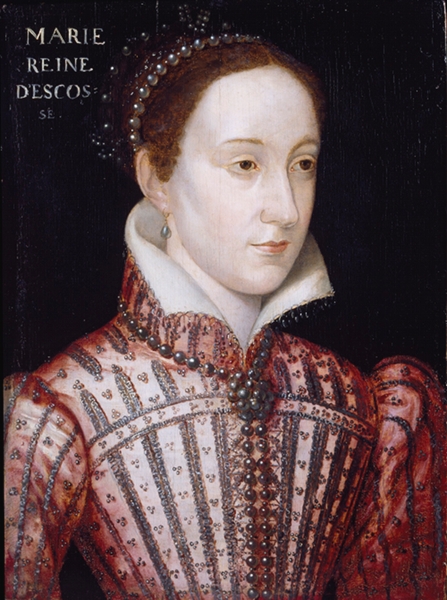
(Mary - Public domain image sourced from Wikipedia)
Sunday, April 20, 2014
Bad Bad Brandy
The Kingdom of Navarre was located in Spain and from 1349-1387 was ruled by Charles the Second.
He is now known as Charles the Bad.
Given that this was the 14th century and brutality was almost expected of Kings, Charles had to have been particularly, well, bad.
He is now known as Charles the Bad.
Given that this was the 14th century and brutality was almost expected of Kings, Charles had to have been particularly, well, bad.
Sunday, March 23, 2014
Whiskey business
Around about 1850 a boy named Jasper Newton Daniel was born in Tennessee . One of 12 children, he was quickly nicknamed Jack. At the age of 10, Jack was apprenticed to the local storekeeper who also happened to be the local Lutheran minister, Reverend Call.
Like many good men of the cloth, Rev. Call enjoyed a drink. As a storekeeper he could run his own still. Whiskey was his drink and using traditional Lincoln county processes made Rev. Call's whiskey well sought after. Jack took to the trade like a duck to water. (Or a drinker to his whiskey...)

Like many good men of the cloth, Rev. Call enjoyed a drink. As a storekeeper he could run his own still. Whiskey was his drink and using traditional Lincoln county processes made Rev. Call's whiskey well sought after. Jack took to the trade like a duck to water. (Or a drinker to his whiskey...)
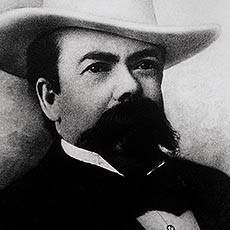
(public domain image sourced from wikipedia)
Monday, June 25, 2012
The Clap
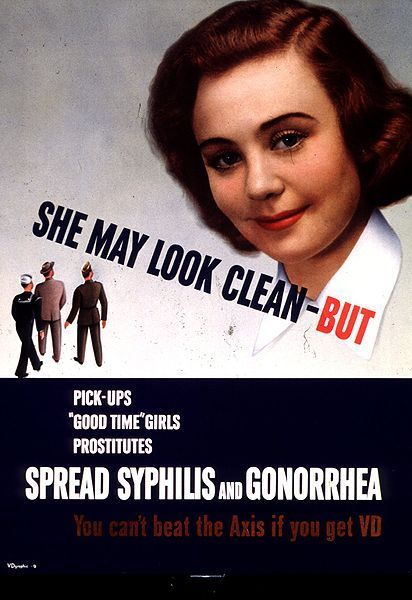
Gonorrhoea and syphilis. Two microscopic organisms that over the years have removed more men from the battlefield of various conflicts than fists, bayonets, bullets, sabres, mustard gas, grenades, mortars, tanks or any creative combination thereof, combined.
An address by Surgeon General Gorgas before the General Sessions of the American Public Health Association in August 1917 expresses the wish that if he were provided a magic wand and were given the choice to eradicate wounds or venereal disease, he would choose venereal disease. "A man with a flesh wound through the thigh is back in the trenches within ten days or two weeks, frequently in less time. If he contracts a venereal disease, his average disability is very much longer. In other words, to the commanding general, the loss is greater for a man who contracts gonorrhea than for a man who is shot through the thigh, and if the commanding general could lay aside all question of morality,he would probably choose the eradication of venereal disease rather than the prevention of wounds."
Sunday, April 1, 2012
I'm reaching and I know it...
In 1981 a syndrome was first described that baffled doctors and quickly killed its victims. That syndrome came to be known as AIDS.
Today AIDS or more correctly the precursor virus HIV, is more of a chronic illness in the western world. We have good treatment and most sufferers can expect to live well into old age.
However in the mid eighties and early nineties, this was not the case.
Dr. Turkey is old enough to remember the large public health campaign that occurred in Australia in the late 1980s, which is the origin of today's picture interlude.

(Copyright the QAHC) (This is the Royal Easter Show Edition? See, there is a link!)
Condoman was created in 1988 by a group of indigenous health workers in Queensland who felt that the Grim Reaper ads being run for the general population were culturally inappropriate. The 'Don't be shame be game' slogan for condom use was incredibly successful amongst Aboriginal and Torres Strait Islanders and the program eventually spread out to the Pacific Islands. (The general population from memory also responded well).
Australia's overall response to the HIV/AIDS epidemic was one of the best in the world, resulting in a halt and reversal of infection rates. It set the standard for how to respond to the threat of a blood borne/sexually transmitted virus. Australian public health workers are particularly proud of this and the fact that they also managed to do it in a culturally appropriate way.
Unfortunately perhaps due to the fact that things are better these days for sufferers infection rates are once again on the rise, particularly amongst our indigenous populations. Condoman had to make a return in 2009.
Hopefully we won't require the Grim Reaper.
Subscribe to:
Posts (Atom)