Today we continue this blog's obsession with the Tudor period with a discussion about King Henry VIII's third wife, Jane Seymour.
In January 1536 Henry's second wife, Anne Boelyn, miscarried a son at four months gestation. This followed two other miscarriages of male infants after the birth of a healthy daughter, Elizabeth. This proved to be the final straw for Henry, who placed Anne on trial for witchcraft and had her beheaded soon after on the 19th May 1536.
In between the miscarriage and the beheading, Henry moved his mistress, Jane Seymour, into the palace. The two were formally engaged on the 20th May, 1536, the day after Anne's execution, and married ten days later on the 30th May at Whitehall. However Jane was never crowned as Queen as court remained away from London to avoid an outbreak of plague.
Showing posts with label obstetrics. Show all posts
Showing posts with label obstetrics. Show all posts
Tuesday, June 11, 2013

Sunday, November 11, 2012
Obstetrics and WWI
As we come to the end of Remembrance Day for another year, I found myself reflecting on a medical history story that directly relates to the onset of WWI.
The brachial plexus is a group of nerves which supplies the arm and hand. They run from the spinal cord and through the neck into the arm. As a result they are unfortunately susceptible to trauma during the birth process. Particularly this can occur during an obstetric emergency where a baby's head becomes trapped during birth, either from the shoulders being wedged under the mother's pubic bone or an obstructed breech (feet first) birth. The subsequent mechanical manipulation required to free the baby is the usual cause. However when certain death is the alternative - sometimes a brachial plexus palsy is the lesser of two traumas.
Unfortunately, Kaiser Wilhelm did not see it this way.

The brachial plexus is a group of nerves which supplies the arm and hand. They run from the spinal cord and through the neck into the arm. As a result they are unfortunately susceptible to trauma during the birth process. Particularly this can occur during an obstetric emergency where a baby's head becomes trapped during birth, either from the shoulders being wedged under the mother's pubic bone or an obstructed breech (feet first) birth. The subsequent mechanical manipulation required to free the baby is the usual cause. However when certain death is the alternative - sometimes a brachial plexus palsy is the lesser of two traumas.
Unfortunately, Kaiser Wilhelm did not see it this way.

Saturday, October 20, 2012
Alice Bunker Stockham and Tokology
One of the nurses at work, knowing my love for all things medical and historical decided to loan me a book.

Tokology: A book for every woman was authored by Alice Bunker Stockham (1833-1912) in 1886 (although I believe this copy is almost certainly a later edition. It is essentially a guide for the layman about pregnancy and women's health. Stockham is an utterly intriguing character. An obstetrician and gynaecologist from Chicago, she was only the fifth woman to be made a doctor in the United States.

Tokology: A book for every woman was authored by Alice Bunker Stockham (1833-1912) in 1886 (although I believe this copy is almost certainly a later edition. It is essentially a guide for the layman about pregnancy and women's health. Stockham is an utterly intriguing character. An obstetrician and gynaecologist from Chicago, she was only the fifth woman to be made a doctor in the United States.
Wednesday, August 29, 2012
Before the Birth of One of Her Children
I recently found a link to a poem written by the first poet and first female writer to be printed in the British North American Colonies. Anne Bradstreet was born in England in 1612. She immigrated to America in 1630 with her husband Simon as part of a fleet of Puritan immigrants.

Bradstreet suffered from smallpox as a child, an illness that went on to cause her paralysis in later life. She was also stricken with tuberculosis in later life. Despite this she gave birth to eight children and lived to the age of sixty.
Bradstreet's works reflected on the hardships of her life in the Colonies, and were about her husband and her children. They give insight into the Puritan faith, in particular its strict moral code.
One of the most interesting of her poems is entitled, ' Before the Birth of One of her Children'.
The simple verse betrays not only Bradstreet's deep love for her children, but also the inherent fear and respect with which she held childbirth. It gives great insight into the mental prepartion mothers of her time underwent before giving birth.
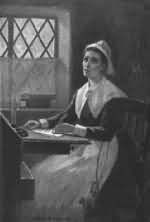
Bradstreet suffered from smallpox as a child, an illness that went on to cause her paralysis in later life. She was also stricken with tuberculosis in later life. Despite this she gave birth to eight children and lived to the age of sixty.
Bradstreet's works reflected on the hardships of her life in the Colonies, and were about her husband and her children. They give insight into the Puritan faith, in particular its strict moral code.
One of the most interesting of her poems is entitled, ' Before the Birth of One of her Children'.
The simple verse betrays not only Bradstreet's deep love for her children, but also the inherent fear and respect with which she held childbirth. It gives great insight into the mental prepartion mothers of her time underwent before giving birth.
Saturday, July 21, 2012
Test Tube Baby
In three days time the world's very first baby conceived via IVF turns 34.
Born on the 25th July 1978, Louise Joy Brown was born at the Oldham General Hospital in the United Kingdom. Her parents, Lesley and John Brown had been unsuccessfully trying to conceive for nine years, prevented due to the fact that Lesley had blocked fallopian tubes.

As early as the 1930s the possibility had been raised by researchers that fertilisation of embryos could occur outside the human body (in vitro). In the late 1940s experiments were being conducted in the US in women where eggs were collected and exposed to sperm. In 1959 the first mammalian in vitro pregnancys were achieved using rabbits.
However, demand for assisted pregnancy did not really take off until the 1960s. Falling adoption rates occurred due to better social support for single mothers and safer and wider access to abortion services. In 1961 ovum were first collected using laproscopic methods. In 1973 the first pregnancy in occurred, facilitated by the team of Carl Wood and John Leeton in Melbourne Australia. Unfortunately, this resulted in a miscarriage. Then in 1976, a team of researchers headed by Patrick Steptoe and Robert Edwards reported on an embryo transfer which resulted in ectopic pregnancy.
In 1977 Steptoe and Edwards performed another embryo transfer, this time on Lesley Brown. Unlike previously, they transferred the embryo after two and a half days. This time the pregnancy took. Lesley Brown was monitored very closely throughout, with regular ultrasounds and amniocentesis. About a week prior to her due date, Mrs. Brown developed preeclampsia and the decison was made to deliver her baby early. Louise Joy was born on the 25th July 1978 at 1147pm weighing 2.3 kilograms via emergency caeserean section. Although referred to by the UK media as a "test tube baby" she was actually conceived in a petri dish.

Her sister, Natalie, was born four years later and became the world's fortieth IVF baby.
Since then the technology of IVF has improved in leaps and bounds. The discovery of how to control cycles and stimulate ovulation allowed IVF to become widely useful in a clinical setting. Other techniques such as intra-cytoplasic sperm injection (ICSI) means that IVF is now applicable to male infertility as well. For their work, Prof Edwards won the Nobel Prize in biology in 2010. (Dr. Steptoe passed away in 1988 and would have shared the award, unfortunately the Nobel is not awarded post humously).
There are now well over five million children world wide that owe their existence to IVF and related technologies. All due to the bravery of Lesley and John Brown.
Louise Brown, delightfully, is now the mother of a son, Cameron, conceived naturally and born in 2006. Her father John passed away in 2006. Lesley Brown, unfortunately, passed away just a month ago from complications of a gallbladder infection.
Speaking on behalf of Prof Edwards a spokesperson said it best:
"Lesley was a devoted mum and grandmother and through her bravery and determination many millions of women have been given the chance to become mothers. She was a lovely, gentle lady and we will all remember her with deep affection."

Born on the 25th July 1978, Louise Joy Brown was born at the Oldham General Hospital in the United Kingdom. Her parents, Lesley and John Brown had been unsuccessfully trying to conceive for nine years, prevented due to the fact that Lesley had blocked fallopian tubes.

Louise Brown, moments after birth.
As early as the 1930s the possibility had been raised by researchers that fertilisation of embryos could occur outside the human body (in vitro). In the late 1940s experiments were being conducted in the US in women where eggs were collected and exposed to sperm. In 1959 the first mammalian in vitro pregnancys were achieved using rabbits.
However, demand for assisted pregnancy did not really take off until the 1960s. Falling adoption rates occurred due to better social support for single mothers and safer and wider access to abortion services. In 1961 ovum were first collected using laproscopic methods. In 1973 the first pregnancy in occurred, facilitated by the team of Carl Wood and John Leeton in Melbourne Australia. Unfortunately, this resulted in a miscarriage. Then in 1976, a team of researchers headed by Patrick Steptoe and Robert Edwards reported on an embryo transfer which resulted in ectopic pregnancy.
In 1977 Steptoe and Edwards performed another embryo transfer, this time on Lesley Brown. Unlike previously, they transferred the embryo after two and a half days. This time the pregnancy took. Lesley Brown was monitored very closely throughout, with regular ultrasounds and amniocentesis. About a week prior to her due date, Mrs. Brown developed preeclampsia and the decison was made to deliver her baby early. Louise Joy was born on the 25th July 1978 at 1147pm weighing 2.3 kilograms via emergency caeserean section. Although referred to by the UK media as a "test tube baby" she was actually conceived in a petri dish.
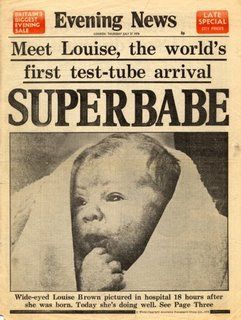
Her sister, Natalie, was born four years later and became the world's fortieth IVF baby.
Since then the technology of IVF has improved in leaps and bounds. The discovery of how to control cycles and stimulate ovulation allowed IVF to become widely useful in a clinical setting. Other techniques such as intra-cytoplasic sperm injection (ICSI) means that IVF is now applicable to male infertility as well. For their work, Prof Edwards won the Nobel Prize in biology in 2010. (Dr. Steptoe passed away in 1988 and would have shared the award, unfortunately the Nobel is not awarded post humously).
There are now well over five million children world wide that owe their existence to IVF and related technologies. All due to the bravery of Lesley and John Brown.
Louise Brown, delightfully, is now the mother of a son, Cameron, conceived naturally and born in 2006. Her father John passed away in 2006. Lesley Brown, unfortunately, passed away just a month ago from complications of a gallbladder infection.
Speaking on behalf of Prof Edwards a spokesperson said it best:
"Lesley was a devoted mum and grandmother and through her bravery and determination many millions of women have been given the chance to become mothers. She was a lovely, gentle lady and we will all remember her with deep affection."
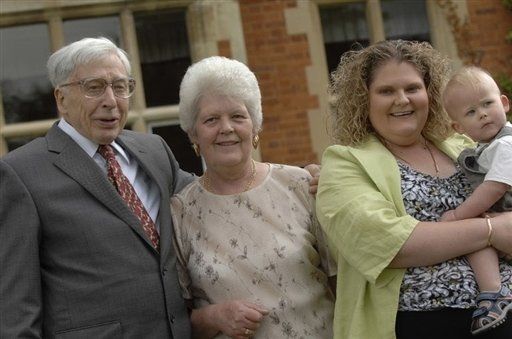
Prof Edwards, Lesley Brown, Louise Brown and her son Cameron.
Sunday, July 15, 2012
Wascally Wabbits
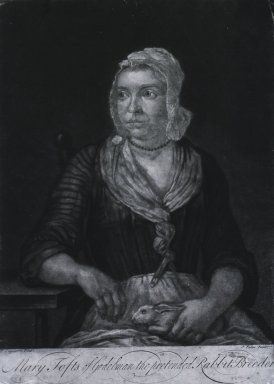
In September 1726 a young woman named Mary Toft, about 25 at the time, went into labour with her third child. The pregnancy had been complicated. Forced to undertake heavy work in the fields throughout she stated that she had suffered a great deal of pain and a month prior had passed several pieces of flesh and clots.
On the night Mary laboured in September her neigbour watched incredulously as Mary produced several pieces of animal flesh. The neighbour showed these to Mary's mother in law, a midwife, who contacted John Howard a local surgeon and "man-midwife".
Sceptical, Howard attended Mary the following day. Initially he found nothing. However Mary once again went into labour a few days later. Howard returned and subsequently delivered three legs of a tabby cat, a rabbit leg and the intestines of a cat.
Thursday, July 5, 2012
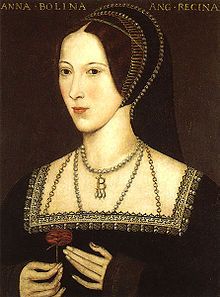
The D-Downfall of Anne Boelyn
Anne Boelyn.
Love her or hate her, it's hard to decide.
Henry the Eighth couldn't really figure it out either.

Anne Boelyn was born somewhere between 1501 and 1507 at Hever Castle in Kent. She was sent to France to wait apon Queen Claude of France and complete her studies, returning to England when she was about twenty. This education in France proved pivotal and may have shaped some of Anne's more reformative beliefs in her later life.
Anne's family, and in particular her Uncle, Thomas Howard, the Duke of Norfolk, were ambitious for position at court. They must have been delighted when Anne quickly caught the eye of King Henry VIII in 1526 and that within a year he had proposed marriaged to her.
The slight problem being, of course, that he was already married to Catherine of Aragon.
Catherine of Aragon, Henry's first wife, had birthed six children. A stillborn son, a stillborn daughter, two sons who lived less than a month, both named Henry, Duke of Cornwell, an unnamed daughter who lived less than a week, and Mary, who would go on to become Queen of England.
She had not borne a living son, and Henry was determined to set her aside.
Love her or hate her, it's hard to decide.
Henry the Eighth couldn't really figure it out either.
Anne Boelyn was born somewhere between 1501 and 1507 at Hever Castle in Kent. She was sent to France to wait apon Queen Claude of France and complete her studies, returning to England when she was about twenty. This education in France proved pivotal and may have shaped some of Anne's more reformative beliefs in her later life.
Anne's family, and in particular her Uncle, Thomas Howard, the Duke of Norfolk, were ambitious for position at court. They must have been delighted when Anne quickly caught the eye of King Henry VIII in 1526 and that within a year he had proposed marriaged to her.
The slight problem being, of course, that he was already married to Catherine of Aragon.
Catherine of Aragon, Henry's first wife, had birthed six children. A stillborn son, a stillborn daughter, two sons who lived less than a month, both named Henry, Duke of Cornwell, an unnamed daughter who lived less than a week, and Mary, who would go on to become Queen of England.
She had not borne a living son, and Henry was determined to set her aside.
Sunday, July 1, 2012
Observations in Midwifery
A truly unique tome is currently up for auction in the United Kingdom.
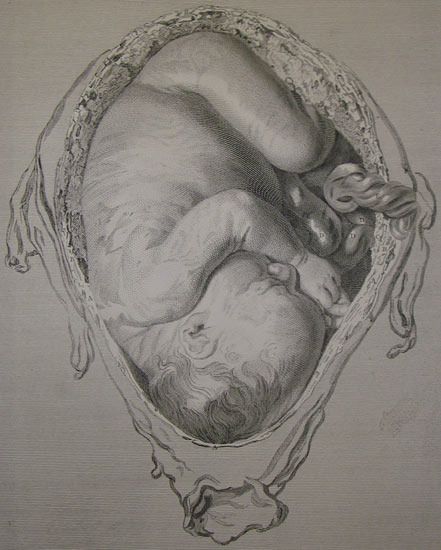
 Observations in Midwifery, by Percival Willughby is a record of 150 case histories attended by Willughby over his years of practice. Written in about 1670 it was not published until many years after his death in 1863. Only 100 copies were produced, 17 sold, and only 2 remain in existance today.
Monday, May 21, 2012
Caesar
Your intrepid reporter is currently at an intensive pre-examination revision course, learning all about saving the lives of mother's and babies. Which is by way of an excuse as to why there will be no detailed post this month.
Instead from the collection of the US National Library of Medicine we have the following image. A woodcut entitled La commare o riccoglitrice dell'eccmo. sr. Scipion Mercurii, and dating back to 1601 it depicts a woman being restrained by two other man as another surgically extracts a foetus from her abdomen.
 One of the earliest known images of caeserean section.
Caeserean section as we know it today was not how the procedure was performed prior to mid this century. Generally it was only performed post-mortem, as in after the mother was already dead, which meant the success rate of also delivering a live baby was quite slim.
Thankfully on my revision course I am learning that we have come a long way....
Contrary to popular belief, by the way, it seems likely that Julius Caesar was not born this way, as his mother survived his birth - but we'll save his story for another day.
Instead from the collection of the US National Library of Medicine we have the following image. A woodcut entitled La commare o riccoglitrice dell'eccmo. sr. Scipion Mercurii, and dating back to 1601 it depicts a woman being restrained by two other man as another surgically extracts a foetus from her abdomen.

Caeserean section as we know it today was not how the procedure was performed prior to mid this century. Generally it was only performed post-mortem, as in after the mother was already dead, which meant the success rate of also delivering a live baby was quite slim.
Thankfully on my revision course I am learning that we have come a long way....
Contrary to popular belief, by the way, it seems likely that Julius Caesar was not born this way, as his mother survived his birth - but we'll save his story for another day.
Thursday, December 22, 2011
Semmelweis and the great Handwashing mystery
In Vienna in the early 1800s two wards of the General Hospital delivered babies. In Ward One the babies were delivered by medical students and in Ward Two by midwives. Both wards were free and provided care to the poorer women of Vienna, yet strangely Ward One had a very poor reputation outside the hospital.
This had nothing to do with the care the women received from their medical professional. The techniques of delivery were the same whether performed by medical students or midwives. Yet in Ward Two the death rate from ‘childbed fever’ was 4-5%. In Ward One it was double that at 9- 10%.
Childbed fever was a horrid illness that is virtually unheard of today. Aftrr birthing her baby a young woman would develop an high fever, abdominal pain and virulent red streaks across her belly (erysipelas). Eventually this overwhelming infection would result in unconsciousness and death.
At the time, no one was overly interested or concerned about this disparity. The difference between the care these patients received was only in who provided the care. What seems so obvious to us now was simply not seen by the practitioners of the day. Childbed fever was known to occur in clusters. Even though this kind of ongoing affliction could not have a random basis, it was accepted because there was no better explanation. Keep in mind that this was all some fifteen years before Louis Pasteur came up with the concept of bacteria.
Up until a young physician named Semmelweis came along.
Ignaz Philipp Semmelweis (1818-1865) was born in Buda, Hungary. He studied medicine at the Universities of Pest and Vienna. In 1846 he was appointed to the General Hospital in Vienna.

It is important for us to note that Semmelweis had been greatly affected by the death of his friend, Jakob Kolletschka some years prior. Kolletschka, a professor of forensic medicine, had cut his finger whilst performing a post-mortem examination. Gloves, of course, were not brought into widespread use until some fifty years later. Kolletschka had developed an high fever, abdominal pain and erisypelas and had quickly passed away.
To modern day doctors, this is the classic presentation of septicaemia, or blood poisoning.
Semmelweis noted that women who had their babies outside the hospital, prior to admission, rarely suffered from childbed fever. He also noted that medical students would attend deliveries straight after handling corpses in the autopsy room. He deduced that the medical students were carrying some kind of poison on their hands which was infecting the labouring women.
As a result he insisted that anyone in the hospital attending the delivery of a baby would first have to wash their hands in chlorinated water. Within a year the mortality rate from childbed fever in both Ward’s One and Two had dropped to one percent.
Despite this success, Semmelweis’s changes were deeply resented by the medical fraternity. Doctors of the time were actually proud of the ‘hospital odour’ they carried on their hands, considering it as a mark of their status. Semmelweis's protocol for handwashing was also time consuming. Similarly, they were angry at the suggestion that they could have been responsible for the women’s deaths. Semmelweis published several papers of his findings, which were ignored, and he was eventually forced out of his job in 1850.
Undettered, he began teaching midwifery at the Pest University, and continued to publish papers. In 1861 he published a book, his seminal work, entitled Die Aetiologie, der Begriff und die Prophylaxis des Kindbettfiebers (the Cause, Theory and Prevention of Childbed Fever).
Unfortunately this was a rambling and dense tome where the point about handwashing was deeply buried and not easily extractable or understandable. Unsurprisingly that most important conclusion, therefore, fell on deaf ears.
The book was probably one of the first signs of Semmelweis impending breakdown. He became increasingly irrational and psychotic and was eventually admitted to a mental hospital. Here he became violent and was beaten by attendants. As a result of the injuries he suffered, he developed blood poisoning, and passed away some two weeks later.
The cause of Semmelweis’s own breakdown is unclear. It’s somewhat romantic to think that that the ignorance and frustrations of the medical profession caused him to go insane. However, it is much more likely that he already suffered a psychotic tendency and his professional frustration was simply the trigger.
Either way, the cause of his death is deeply ironic.
As to the actions of the maternity community, Semmelweis's work was largely unknown. Fourteen years after his death, a gynaecologist went to present a paper denouncing the idea that a contagion was responsible for childbed fever. Fortunately, Louis Pasteur was present at the same conference, and the great man stood up and silenced the audience with the announcement that a bacteria, streptococcus, was the causative agent. That’s when things finally began to change.
This had nothing to do with the care the women received from their medical professional. The techniques of delivery were the same whether performed by medical students or midwives. Yet in Ward Two the death rate from ‘childbed fever’ was 4-5%. In Ward One it was double that at 9- 10%.
Childbed fever was a horrid illness that is virtually unheard of today. Aftrr birthing her baby a young woman would develop an high fever, abdominal pain and virulent red streaks across her belly (erysipelas). Eventually this overwhelming infection would result in unconsciousness and death.
At the time, no one was overly interested or concerned about this disparity. The difference between the care these patients received was only in who provided the care. What seems so obvious to us now was simply not seen by the practitioners of the day. Childbed fever was known to occur in clusters. Even though this kind of ongoing affliction could not have a random basis, it was accepted because there was no better explanation. Keep in mind that this was all some fifteen years before Louis Pasteur came up with the concept of bacteria.
Up until a young physician named Semmelweis came along.
Ignaz Philipp Semmelweis (1818-1865) was born in Buda, Hungary. He studied medicine at the Universities of Pest and Vienna. In 1846 he was appointed to the General Hospital in Vienna.
It is important for us to note that Semmelweis had been greatly affected by the death of his friend, Jakob Kolletschka some years prior. Kolletschka, a professor of forensic medicine, had cut his finger whilst performing a post-mortem examination. Gloves, of course, were not brought into widespread use until some fifty years later. Kolletschka had developed an high fever, abdominal pain and erisypelas and had quickly passed away.
To modern day doctors, this is the classic presentation of septicaemia, or blood poisoning.
Semmelweis noted that women who had their babies outside the hospital, prior to admission, rarely suffered from childbed fever. He also noted that medical students would attend deliveries straight after handling corpses in the autopsy room. He deduced that the medical students were carrying some kind of poison on their hands which was infecting the labouring women.
As a result he insisted that anyone in the hospital attending the delivery of a baby would first have to wash their hands in chlorinated water. Within a year the mortality rate from childbed fever in both Ward’s One and Two had dropped to one percent.
Despite this success, Semmelweis’s changes were deeply resented by the medical fraternity. Doctors of the time were actually proud of the ‘hospital odour’ they carried on their hands, considering it as a mark of their status. Semmelweis's protocol for handwashing was also time consuming. Similarly, they were angry at the suggestion that they could have been responsible for the women’s deaths. Semmelweis published several papers of his findings, which were ignored, and he was eventually forced out of his job in 1850.
Undettered, he began teaching midwifery at the Pest University, and continued to publish papers. In 1861 he published a book, his seminal work, entitled Die Aetiologie, der Begriff und die Prophylaxis des Kindbettfiebers (the Cause, Theory and Prevention of Childbed Fever).
Unfortunately this was a rambling and dense tome where the point about handwashing was deeply buried and not easily extractable or understandable. Unsurprisingly that most important conclusion, therefore, fell on deaf ears.
The book was probably one of the first signs of Semmelweis impending breakdown. He became increasingly irrational and psychotic and was eventually admitted to a mental hospital. Here he became violent and was beaten by attendants. As a result of the injuries he suffered, he developed blood poisoning, and passed away some two weeks later.
The cause of Semmelweis’s own breakdown is unclear. It’s somewhat romantic to think that that the ignorance and frustrations of the medical profession caused him to go insane. However, it is much more likely that he already suffered a psychotic tendency and his professional frustration was simply the trigger.
Either way, the cause of his death is deeply ironic.
As to the actions of the maternity community, Semmelweis's work was largely unknown. Fourteen years after his death, a gynaecologist went to present a paper denouncing the idea that a contagion was responsible for childbed fever. Fortunately, Louis Pasteur was present at the same conference, and the great man stood up and silenced the audience with the announcement that a bacteria, streptococcus, was the causative agent. That’s when things finally began to change.
Friday, November 25, 2011
Queen Victoria Feels no Pain
Women giving birth in the modern era owe a great deal of gratitude to Queen Victoria, although these facts are not widely known. However, were it not for her, it is possible that stigmas surrounding pain relief in childbirth might still exist.
But before we explore this, we must first discuss some of the early history of anaesthetics.
It’s hard to imagine a world without anaesthetics. We use them liberally in almost every facet of medicine, from the simple insertion of cannulas, to keeping people unconscious on the operating table for hours at a time.
So it may surprise you to learn that while the history of surgery is almost as old as medicine, the concept of anaesthetics has only been around since the nineteenth century.
But before we explore this, we must first discuss some of the early history of anaesthetics.
It’s hard to imagine a world without anaesthetics. We use them liberally in almost every facet of medicine, from the simple insertion of cannulas, to keeping people unconscious on the operating table for hours at a time.
So it may surprise you to learn that while the history of surgery is almost as old as medicine, the concept of anaesthetics has only been around since the nineteenth century.
Subscribe to:
Posts (Atom)