Western Australia has had 20 new cases of leprosy in the past five years. The disease disproportionately affects Aboriginal and Torres Strait Islander communities.
So what is leprosy? And why isn’t it a thing of the past?
Thursday, September 20, 2018

Monday, July 30, 2018
When plague came to Australia
The word ‘plague’ immediately conjures images of a medieval time-period, rats, and, if you have a brain like mine, Monty Python performers shouting ‘bring out yer dead’.
In fact, there were three pandemics of plague – the 17th century ‘black death’ being the best known. All three pandemic plagues – the Justinian plague of the 5th century, the medieval black plague and the third pandemic or ‘modern plague’ - had significantly high mortality rates and as a result have changed the course of civilisation.
In fact, there were three pandemics of plague – the 17th century ‘black death’ being the best known. All three pandemic plagues – the Justinian plague of the 5th century, the medieval black plague and the third pandemic or ‘modern plague’ - had significantly high mortality rates and as a result have changed the course of civilisation.
Wednesday, October 25, 2017
General Practice Past: Dr. Thomas Hillas
Just a short one today. A short story about an Australian GP*.
Dr. Thomas Hillas was the head surgeon at Ballarat Base Hospital.
Dr. Hillas was operating on a woman on the 13th January 1872 for a large ovarian cyst which was found at the time of procedure to contain 11 litres of fluid.

To his suprise on opening the abdomen he discovered his patient was also full term pregnant.
So, he decided he'd incise the uterus and remove the baby as well as drain the cyst.
This ended up being the first caeserean section performed in Australian. And even more shockingly, as the mortality rate for a caeserean section at this time was enormously high, both the mother and the infant survived.

Dr. Hillas eventually left Ballarat and moved to Wagga Wagga where he practiced until his death in 1892.
The first planned caeserean section in Australia did not occur thereafter until 1885 at the Alfred in Melbourne and the procedure was still rare until the 1950s as the mortality rate was close to 25%. By the 1950s thanks to antibiotics it had become the accepted solution for seriously obstructed labour and was being used in 2-5% of cases with a mortality rate of 0.15%.
All of which means Dr. Hillas's patients were very lucky!
*(Some may argue he was in fact a surgeon but I would suggest that the early rural doctors who saw all manner of patients were the quintessential General Practitioners and so I will claim them for my specialty)
Dr. Thomas Hillas was the head surgeon at Ballarat Base Hospital.
Dr. Hillas was operating on a woman on the 13th January 1872 for a large ovarian cyst which was found at the time of procedure to contain 11 litres of fluid.

To his suprise on opening the abdomen he discovered his patient was also full term pregnant.
So, he decided he'd incise the uterus and remove the baby as well as drain the cyst.
This ended up being the first caeserean section performed in Australian. And even more shockingly, as the mortality rate for a caeserean section at this time was enormously high, both the mother and the infant survived.

(Dr Hillas's home Winchester House in Ballarat)
The first planned caeserean section in Australia did not occur thereafter until 1885 at the Alfred in Melbourne and the procedure was still rare until the 1950s as the mortality rate was close to 25%. By the 1950s thanks to antibiotics it had become the accepted solution for seriously obstructed labour and was being used in 2-5% of cases with a mortality rate of 0.15%.
All of which means Dr. Hillas's patients were very lucky!
*(Some may argue he was in fact a surgeon but I would suggest that the early rural doctors who saw all manner of patients were the quintessential General Practitioners and so I will claim them for my specialty)
Saturday, September 3, 2016
The strangler.
Last year I picked up a book on medical satire from 1915 from a bookfair for $4. I was already pretty stoked. (More on that book later hopefully).
Then I found this inside.

Then I found this inside.

My stoked-o-meter officially went through the roof.
Saturday, June 18, 2016
General Practice Past: A Pecha Kucha on the history of General Practice in Australia
Saturday, September 12, 2015
General Practice Past: Dr. Leslie MacDonald Outridge
Many doctors chose to leave their practice during WWII and sign up for the Australian Army medical corps. Our subject today was one such doctor.
Dr. Leslie MacDonald Outridge was born in Brisbane on the 1st November 1900. He was a graduate of the University of Sydney in 1924, and then returned to practice in various locations around Queensland before settling on Gympie to set up his own practice.
Dr. Leslie MacDonald Outridge was born in Brisbane on the 1st November 1900. He was a graduate of the University of Sydney in 1924, and then returned to practice in various locations around Queensland before settling on Gympie to set up his own practice.
Wednesday, August 19, 2015
Finding Gonorrhoea
Long term followers of this blog will know that here at medical history we enjoy a good story about a sexually transmitted infection.
Normally it's syphilis but today I thought we'd make a side track into gonorrhoea.
Monday, June 8, 2015
Digitalis - or putting my toddler into heartblock
My family and I have recently moved to a different part of the country and while I wait for the paperwork to go through to start a new job I am getting on with planting a garden in our new home. I came home with seeds - pansies, sunflowers, violets and foxglove all of which looked very pretty on the packet and was planting them while my toddler enthusiastically "helped" (as toddlers do).
It wasn't until I was about ready to plant and looking at the packet for a second time that a bell started ringing in my head. I turned it over and sure enough, there in very small print was the warning that foxglove was poisonous if ingested. With the small tornado enthusiastically eating grass beside me, the seeds were quickly disposed of in the bin.
So what is foxglove, apart from quite pretty?

It wasn't until I was about ready to plant and looking at the packet for a second time that a bell started ringing in my head. I turned it over and sure enough, there in very small print was the warning that foxglove was poisonous if ingested. With the small tornado enthusiastically eating grass beside me, the seeds were quickly disposed of in the bin.
So what is foxglove, apart from quite pretty?

(public domain image sourced from wikipedia)
Tuesday, March 3, 2015
General Practice Past: Dr Ettie Lyons
If any of you follow my Facebook or twitter feeds you will know me to be a proud (and recently vocal) General Practitioner. You will also know that in the last little while my specialty has taken a political beating and I am not the only GP feeling more than a little devalued and questioning my choice of career.
I had been planning and researching this particular series for a while - delayed as always due to a busy life. I'm bringing it forward for my own purpose - to find inspiration in the amazing doctors who went before me in this remarkable specialty of mine.
We will start with Dr. Ettie Lyons.
I had been planning and researching this particular series for a while - delayed as always due to a busy life. I'm bringing it forward for my own purpose - to find inspiration in the amazing doctors who went before me in this remarkable specialty of mine.
We will start with Dr. Ettie Lyons.
Saturday, November 29, 2014
Asthma cigarettes
Some of you may have seen this particular image doing the rounds a while back. I'm guilty of posting it myself without comment to my facebook page because, you know, smoking and asthma! Funny!

As with every meme that does the rounds on facebook, however, the wider historical context of this one probably got a little bit missed in the details.
So let's have a little bit of a chat about 'Asthma cigarettes'.

So let's have a little bit of a chat about 'Asthma cigarettes'.
Sunday, November 2, 2014
Dr. Richard Mead - Generous Georgian
I recently got invited to the opening of an exhibition at the Foundling museum. Your correspondent was doubly excited a) because she has never been taken seriously as a blogger before and b) because it was about a really interesting character named Dr. Richard Mead.
Also your correspondent really enjoys a good medical history exhibit.
Unfortunately she ran up against the smallish problem whereby she lives in Australia with a toddler and an obstetric practice and the exhibition is in London.
The people at the Foundling museum have been kind enough to bring the exhibition to me, and today I am going to bring a little of it to you. If you are in London, though, please go, tell me how awesome it is and turn me green with jealousy!
Also your correspondent really enjoys a good medical history exhibit.
Unfortunately she ran up against the smallish problem whereby she lives in Australia with a toddler and an obstetric practice and the exhibition is in London.
The people at the Foundling museum have been kind enough to bring the exhibition to me, and today I am going to bring a little of it to you. If you are in London, though, please go, tell me how awesome it is and turn me green with jealousy!
Thursday, October 2, 2014
Rear endings
An enema, where fluid is inserted into the bowel via the rectum, is a very useful tool in a doctor or a nurse's toolkit.
It's also often the butt of many, many a joke. (Forgive me for that one. I couldn't help myself).
In modern medicine enemas are most frequently used to help with constipation, clear the bowel out prior to a surgical procedure such as a colonoscopy or to help in imaging, for example in a barium enema.
However it may surprise you to know that history of human's sticking fluid up their rectums is a long and, well, somewhat obsessed one.
It's also often the butt of many, many a joke. (Forgive me for that one. I couldn't help myself).
In modern medicine enemas are most frequently used to help with constipation, clear the bowel out prior to a surgical procedure such as a colonoscopy or to help in imaging, for example in a barium enema.
However it may surprise you to know that history of human's sticking fluid up their rectums is a long and, well, somewhat obsessed one.
Wednesday, September 10, 2014
Shunning the Lepers
To people in Western societies leprosy is usually the punchline of a joke. To us leprosy is now rare and fairly treatable, although interestingly around 200 people a year are still diagnosed in the USA.
However Leprosy still affects around 180, 000 people worldwide acutely, with up to a million suffering chronic complications most of them in Africa and Asia. It is a disease that has only been controlled in very recent history, mainly due to increased hygiene practices. Prior to that it has been something that has stalked humanity for almost all of known history.
The earliest recorded account of a disease resembling leprosy appears in an Egyptian papyrus document in 1550 BC. Indian writings also mention a similar illness in 600 BC. It appears that the army of Alexander the Great may have brought leprosy back from India with them - as accounts of it appeared in their writings around this time. Similarly it began to be recorded by the Romans around 62 BC when Pompeii's soldiers came back from Asia minor.
However Leprosy still affects around 180, 000 people worldwide acutely, with up to a million suffering chronic complications most of them in Africa and Asia. It is a disease that has only been controlled in very recent history, mainly due to increased hygiene practices. Prior to that it has been something that has stalked humanity for almost all of known history.
The earliest recorded account of a disease resembling leprosy appears in an Egyptian papyrus document in 1550 BC. Indian writings also mention a similar illness in 600 BC. It appears that the army of Alexander the Great may have brought leprosy back from India with them - as accounts of it appeared in their writings around this time. Similarly it began to be recorded by the Romans around 62 BC when Pompeii's soldiers came back from Asia minor.
Tuesday, August 12, 2014
Outbreak
It's all over the news. And it's scary. The virus without a cure that makes you literally bleed to death. With a 90% mortality rate. That's raging out of control in Africa.
Ebola.
But what is it, exactly? And where did it come from?
Ebola.
But what is it, exactly? And where did it come from?
Saturday, July 26, 2014
An Eye for War.
This wasn't the post I was planning to write, I had one planned about leprosy, - but I can never resist a story about a good Australian doctor, so hopefully you can all wait a little longer for that tale.
Today we are going to talk about the wonderfully named Sir Charles Snodgrass Ryan who was born on Killeen Station in Victoria on the 20th September 1853. He studied at the University of Melbourne and then completed his study at the University of Edinburgh (Australian medical degrees were not wholly awarded in Australia until well into the 20th century - in fact up until very recently, most Australian doctors would complete at least some of their training in the United Kingdom). He then undertook further postgraduate training as a surgeon in Italy and Austria.

Today we are going to talk about the wonderfully named Sir Charles Snodgrass Ryan who was born on Killeen Station in Victoria on the 20th September 1853. He studied at the University of Melbourne and then completed his study at the University of Edinburgh (Australian medical degrees were not wholly awarded in Australia until well into the 20th century - in fact up until very recently, most Australian doctors would complete at least some of their training in the United Kingdom). He then undertook further postgraduate training as a surgeon in Italy and Austria.

Sir Ryan at the time of his enlistment (public domain image sourced from the Australian War Memorial Collection)
Tuesday, July 15, 2014
To the heart of things
Over the last few weeks I have been forced to watch a lot of soccer.
This is a problem because I don't like soccer. I suspect I am not the only person currently suffering in this manner. Fortunately it is now all over for another four years and from what I can understand, it's all about Germany.
Hopefully my saying that hasn't spoiled someone's day.
Anyway in honor of their win I thought today I would talk about a German surgeon who did some (mostly) pretty cool things - which, to me, is generally more interesting than kicking a ball around a field and faking serious injury.

This is a problem because I don't like soccer. I suspect I am not the only person currently suffering in this manner. Fortunately it is now all over for another four years and from what I can understand, it's all about Germany.
Hopefully my saying that hasn't spoiled someone's day.
Anyway in honor of their win I thought today I would talk about a German surgeon who did some (mostly) pretty cool things - which, to me, is generally more interesting than kicking a ball around a field and faking serious injury.

Werner Forssman (public domain image sourced from Wikipedia)
Friday, June 27, 2014
Paralysed
The other day I recieved a terrifying notification via email, advising me to be alert for evidence of polio in returned travellers. This is due to upheaval in Syria, Pakistan and Afghanistan and a growing global antivaccination sentiment. A crying shame as only a few short years ago we were incredibly close to declaring this planet polio free, an incredible legacy to pass onto our children.
In her day job your author does her best to see as many children as possible immunised against deadly diseases just like this one. Now she will use this little hobby of hers to remind whatever audience she has exactly why vaccinations are so important.
In her day job your author does her best to see as many children as possible immunised against deadly diseases just like this one. Now she will use this little hobby of hers to remind whatever audience she has exactly why vaccinations are so important.
Wednesday, June 4, 2014
Round the Bend
This last week juggling work and a little baby I have found myself frequently thinking that I am going round the bend.
Which of course then leads me to wondering where that phrase may have originated. As your author tends to do.
Clearly the expression has something to do with mental health. There is a school of thought that suggests it may have to do with the fact that many mental asylums were at the end of windy roads.
However I once heard a much more interesting theory, which also happens to be local, that I'd like to share with you today.
Which of course then leads me to wondering where that phrase may have originated. As your author tends to do.
Clearly the expression has something to do with mental health. There is a school of thought that suggests it may have to do with the fact that many mental asylums were at the end of windy roads.
However I once heard a much more interesting theory, which also happens to be local, that I'd like to share with you today.
Saturday, May 17, 2014
How a spirochete secured the English succession
The year was 1565 and Mary, Queen of Scots was on the hunt for a husband.

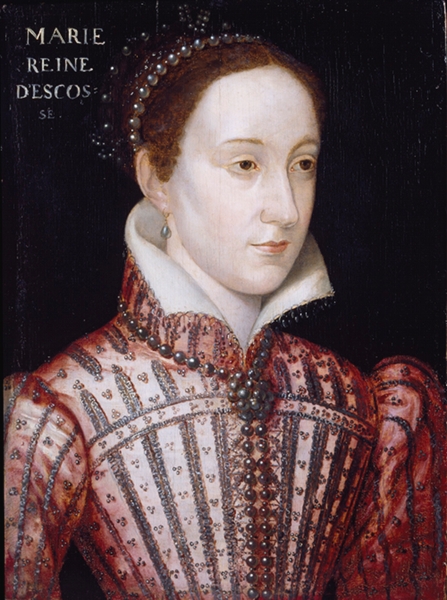
(Mary - Public domain image sourced from Wikipedia)
Sunday, April 20, 2014
Bad Bad Brandy
The Kingdom of Navarre was located in Spain and from 1349-1387 was ruled by Charles the Second.
He is now known as Charles the Bad.
Given that this was the 14th century and brutality was almost expected of Kings, Charles had to have been particularly, well, bad.
He is now known as Charles the Bad.
Given that this was the 14th century and brutality was almost expected of Kings, Charles had to have been particularly, well, bad.
Subscribe to:
Posts (Atom)