Pages

Sunday, May 6, 2012

Hitler and His Habit


The history of humans and drug use is a fascinating one.  Human beings have been using mood-altering substances since the dawn of time.  Traces of alcohol have been found in pots excavated from ancient dig sites in Greece and Rome.  For centuries the biggest trade commodities world wide have been alcohol, nicotine, coffee and opiates, mood altering substances all.  

It seems that something about being human makes us want to alter our state of mind and the Fuhrer was not immune.  


Amphetamine was synthesised for the first time in 1887 by a chemist working at the University of Berlin named Lazăr Edeleanu (given the subject of this story, it is perhaps relevant that he was a Romanian Jew).  Methamphetamine, a related compound, came along in 1893 thanks to a Japanese chemist named Nagai Nagayoshi.  It was first marketed in 1900 under the trade name Benzdrine as a bronchodilator and an appetite suppressant.  Most people are more aware of amphetamine today by its street names such as ice, speed and ecstasy.  They are also probably much more aware of its other properties.  Amphetamine, and its related compounds are very, very good stimulants. 

Unfortunately they also have a number of deleterious side effects.   These include paranoia, agitation, hallucinations, florid psychosis and rapid increasing dependence. 

Over the years several nations have experiemented with amphetamines to help their soldiers stay awake.  Perhaps the most notorious culprit in this department was the German army.  During World War II thousands of German soldiers became addicted to methamphetamine, marketed as Pervitin. 

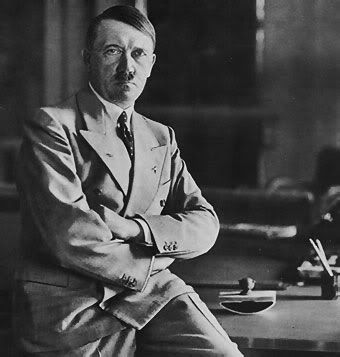
There’s no concrete evidence that Hitler was also using Pervitin.  However the hearsay is fairly compelling.  Given the widespread use of the drug by the German army, it is certain that its properties were very well known to him.  

What is known is that every morning from 1941 Theodor Morell, Hitler’s personal physician, attended him and gave him an intravenous injection.  Throughout 1943 these injections began to be administered at several times throughout the day.  Reportedly these injections contained 'vitamins', however following their administration Hitler was said to become very active, alert, happy, talkative and able to stay awake for great periods of time.  
(Dr. Theodor Morell)


Hitler is widely described as having been insane especially as his behaviour and military judgement became increasingly erratic.  A lack of judgement led to the complete disaster of the Battle of Stalingrad in 1943 and from there the tide of war turned significantly against the Nazis. 
He became increasingly paranoid and aggressive.  He developed a shake in his left hand, attributed by some to Parkinson’s, but also possibly a side effect of the drugs.  Previously very clear on the importance of personal responsibility, Hitler began to blame his subordinates, often violently, for lapses in judgement that were clearly his fault.  

While these symptoms can also be due to schizophrenia, Hitler was 53 in 1942, which is unusually old for a psychotic mental disorder to make its first appearance.  

No, it seems likely that Hitler was a speed addict.  

Methamphetamine is a dangerous drug of addiction which is causing us enormous problems in many societies.  Nonetheless, perhaps we owe a debt of gratitude to Lazăr Edeleanu.  After all, the effects of methamphetamine probably helped the Allies win the war. 
       

Sunday, April 15, 2012

Ship of Fools

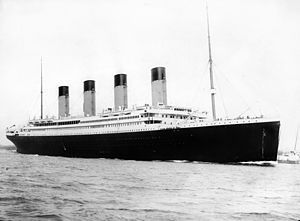
One hundred years ago today at two twenty am in the freezing waters of the North Atlantic Ocean the RMS Titanic sank.  In one of the greatest peacetime maritime disasters in history 1,514 people lost their lives.

For the duration of the short voyage the passengers and crew of the Titanic were served by a small medical staff made up of two surgeons, two nurses and a hospital steward.  

Sunday, April 1, 2012

I'm reaching and I know it...

In 1981 a syndrome was first described that baffled doctors and quickly killed its victims.  That syndrome came to be known as AIDS.  

Today AIDS or more correctly the precursor virus HIV, is more of a chronic illness in the western world.  We have good treatment and most sufferers can expect to live well into old age. 

However in the mid eighties and early nineties, this was not the case.  

Dr. Turkey is old enough to remember the large public health campaign that occurred in Australia in the late 1980s, which is the origin of today's picture interlude. 

(Copyright the QAHC)   (This is the Royal Easter Show Edition?  See, there is a link!)

Condoman was created in 1988 by a group of indigenous health workers in Queensland who felt that the Grim Reaper ads being run for the general population were culturally inappropriate.  The 'Don't be shame be game' slogan for condom use was incredibly successful amongst Aboriginal and Torres Strait Islanders and the program eventually spread out to the Pacific Islands. (The general population from memory also responded well).

Australia's overall response to the HIV/AIDS epidemic was one of the best in the world, resulting in a halt and reversal of infection rates.  It set the standard for how to respond to the threat of a blood borne/sexually transmitted virus.  Australian public health workers are particularly proud of this and the fact that they also managed to do it in a culturally appropriate way. 

Unfortunately perhaps due to the fact that things are better these days for sufferers infection rates are once again on the rise, particularly amongst our indigenous populations.  Condoman had to make a return in 2009.  

Hopefully we won't require the Grim Reaper. 


Tuesday, March 27, 2012

Three Hundred Per Cent

As a doctor currently training in the fabulous speciality of obstetrics, (with a background in the even more fabulous specialty of General Practice) your correspondent stands on the hallowed ground halfway between medicine and surgery.

In that while she performs a great deal of surgery in her day to day life, she still has the ability to mock surgeons (gently of course, as they are her rather friendly and useful colleagues).

Thus how the following adventurous tale of Dr. Robert Liston first came to her ears.


Dr. Liston was a Scotsman, born in 1794 and from his description sounds like quite a character.  In a pre-anaesthetic era speed of surgery was a patient's only hope to avoid pain and infection.  Liston was famous for removing a 20 kilogram scrotal tumour in 4 minutes.

Rather than try to describe the man myself, I will let his contempory, Dr. Richard Gordon, do so for me:

"He was six foot two, and operated in a bottle-green coat with wellington boots. He sprung across the blood-stained boards upon his swooning, sweating, strapped-down patient like a duelist, calling, 'Time me gentlemen, time me!' to students craning with pocket watches from the iron-railinged galleries. Everyone swore that the first flash of his knife was followed so swiftly by the rasp of saw on bone that sight and sound seemed simultaneous. To free both hands, he would clasp the bloody knife between his teeth."

Liston was an imposing and acerbic fellow.  He left Edinburgh, where he had trained and practiced throughout his early career, in 1834 principally because he was so unpopular in the medical community there.  Not least of that was due to knocking down the infamous anatomist Dr. Knox in front of his students.  He assumed that some of the students had slept with the young woman being dissected while she was alive and that their behaviour was voyeuristic.  (As it turned out there was even worse foul play at foot!)

However, his somewhat abrasive personality was not always in the best interest of patients.  In one of the most famous cases associated with his name, Dr Liston was involved in an argument with a junior doctor about whether a mass on a boy's neck was a carotid artery aneurysm (a large swelling of a blood vessel) or an abscess (an infection).  Dr. Liston proceeded to settle the argument by removing his scalpel and lancing the mass there and then. The young boy bled to death in a matter of minutes. 

The remainder of Liston's career was spent in London, where he pioneered some amazing accomplishments, including the first British operation under anaesthesia in 1846.  A leg amputation, performed in 28 seconds, which of course makes one wonder if anaesthesia was required at all.


(in this photo Joseph Lister is actually the gentleman on the top left - I may be geeking out slightly.)

He also invented the Bulldog artery forceps.  I used a variation of them the other day. 

But this is, of course, not why I am telling this story.  

Legend has it that one day Dr. Liston was performing an amputation.  He proceeded to do so in his usual 2 and a half minutes but in his enthusiasm also amputated the fingers of his young surgical assistant, and cut through the coattails of a distinguished spectator who had leaned in too close.  

The spectator perished from fright instantly, the patient a few days later from overwhelming infection, and the assistant a few days after that, also from infection.

It remains the only operation in history with a three hundred percent mortality rate.  

As I tell my surgical colleagues - they've got a lot to live up to ;). 

Monday, February 13, 2012

Louis' Penis Problem

Poor old Louis the 16th. Reportedly a shy, overweight and somewhat uncouth teenager, his father’s mistress referred to him as a “fat, ill-bred boy.” An Austrian courtier in fact stated, “nature seems to have refused everything to the dauphin.” (1)

They weren’t wrong. The poor boy’s life ended on the executioners block at the age of thirty-eight.


Louis XVI

However, he was the heir to the throne of France, so fat or not, the short life he did live was carried out in the lap of luxury. At the age of 14 he was married to the young Marie Antoinette, Archduchess of Austria, aged 13 at the time. She was a young, poised girl, who grew into a woman of fair beauty.


Marie Antoinette

At 13 and 14, one might have expected that it would have taken a while for the marriage to be consummated.

I’m fairly certain that nobody expected it to take seven years.

The Queen of Austria had a strong sense of duty, one which she had vigorously instilled in her children. The young dauphine knew that her position in the French court and the stability of the alliance between France and Austria depended on her producing an heir. The Queen wrote often to her daughter and urged her time and time again to ‘inspire passion’ in her new husband(2). However, despite due diligence in this regard, night after night Marie Antoinette lay down next to her husband and... nothing happened.

Eventually the royal doctors were consulted. They made conciliatory noises and suggested that the Prince was not yet mature. They advised time and patience.

Obviously they failed to actually lay hands on the royal personage. Had they examined the young Prince, they would almost certainly have discovered his phimosis.

Phimosis is a condition in which the foreskin of the penis is adherent. It tends to cause pain during intercourse, as the foreskin can only partially retract and constricts the glans.

Management involves either circumcision, or a small incision in the skin of the foreskin, and blunt dissection. These are both fairly simple operations, however it is generally true that most men become squeamish with just the concept of knife near a penis. Imagine this in the pre-anaesthetic era, and perhaps you understand some of Louis’s problem.

Louis outright refused surgery initially. However, he and Marie Antoinette apparently discussed the problem and he eventually agreed that he would undergo the procedure by his sixteenth birthday (after much persuasion I would imagine!).

However Louis’s sixteenth birthday came and went without surgery.

In 1774, another attempt was made. The surgeon got as far as exposing the site of surgery and spreading out his instruments, before the patient fainted clean away. It seems that this would have been the perfect opportunity, but obviously the surgeon was to timid to incur the Dauphin’s displeasure, and the royal jewels remained untouched.

Eventually in 1775, Louis the 15th passed away, and his son became king. However, his marital woes with Marie Antoinette continued. The situation became even more precarious when two months after the coronation Louis’s sister-in-law, Marie Therese, gave birth to a son (quite originally named Louis Antoine). This child would be the heir to the French throne for a further seven years.

The situation left the couple exposed to a great deal of ridicule by the French public. The rumours of infidelity that dogged Marie Antoinette for the rest of her life have their origins in this time.

Finally in 1777, Emperor Joseph, Holy Roman Emperor and Marie Antoinette’s older brother, arrived for a six week visit designed in part to sort the couple out. He spoke to both his sister and brother in law.

We know of the advice he gave a couple from a letter that Joseph wrote to his own younger brother. Louis it seemed, was able 'to have strong, well conditioned erections',(3), however was unable to carry out the sexual act. Joseph stated that ‘this is incomprehensible, because with all that, he sometimes has nightly emissions, but says plainly that what he does, he does from a sense of duty but never from pleasure.' The Emperor stated quite frankly that if he had a chance to solve the problem sooner Louis, “would have been whipped so that he ejaculated out of sheer rage like a donkey”.(2).


Emperor Joseph


I’m not sure if any donkey’s or whips were involved in the final solution, but whatever Joseph said to Louis, it worked. Louis finally submitted to surgery, and on April 30 1777, the marriage was finally consummated.

The couple went on to have four children together. However, two died in infancy, one died in prison after the revolution, and only one daughter survived to adulthood and exile.

Louis and Marie Antoinette on the other hand, barely had a chance to enjoy their adulthood. Nonetheless, we can say with certainty that despite their early problems, neither of them died a virgin.


Louis faces his executioners